

What is a credit note, and when do you need one?
A credit note reduces or cancels what a customer owes on an invoice, or records money you give back. It refers to the original invoice, which stays as it was.
When you might need a credit note
- The customer returns goods, or part of the work is cancelled.
- You agree to lower the price after you have invoiced.
- You give the customer money back.
UK: what HMRC says about VAT
HMRC’s VAT guide says that when you and your customer adjust the original VAT charge after a price change, you should issue a credit note to your customer and keep a copy. It also says you can use a credit note to adjust the VAT when a customer takes up a prompt payment discount.
Rules in other countries can differ, so check with your tax authority.
Credit note or a corrected invoice?
A credit note gives money back or reduces what is owed. If you simply made a mistake on an invoice you have sent, Genuine Invoice can make a revision instead: a corrected copy with -R1 on its number, while the invoice you sent is kept exactly as it was.
How to issue a credit note in Genuine Invoice
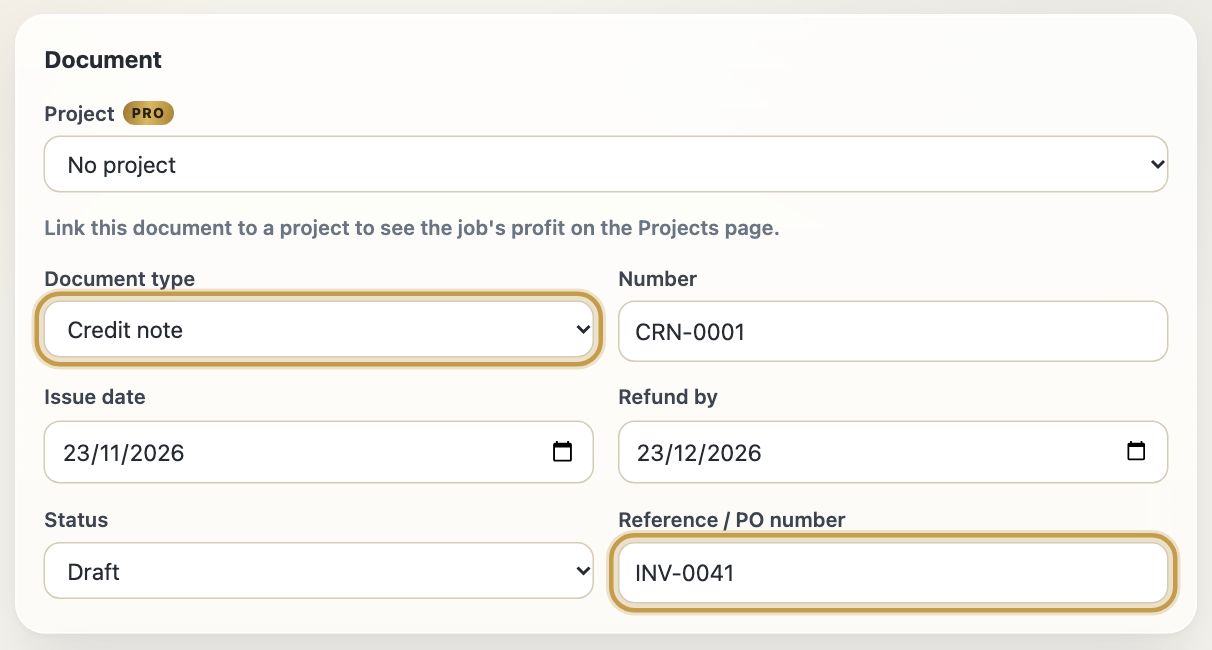
- Choose New document and set Document type to Credit note.
- Add the items you are crediting, and put the original invoice number in Reference / PO number.
- Set Status to Issued when you send it, and to Refunded once the money has gone back.
Issued and refunded credit notes come off your sales figures.
Questions people ask
Does a credit note change my sales figures?
In Genuine Invoice, yes: credit notes marked Issued or Refunded come off your sales figures.
What should a credit note refer to?
The original invoice. In Genuine Invoice, put its number in Reference / PO number so everyone knows what the credit note relates to.
Do I delete the original invoice?
No. The original invoice stays as it was; the credit note is a separate document that refers to it.
Sources
This guide explains the rules in general. It is not tax or legal advice; for your own situation, check with your tax authority or an accountant.